What is ACLS Certification for Nurses

When a patient’s heart rhythm changes without warning, nurses are often the first ones at the bedside to notice. In those moments, your training, instinct, and confidence matter more than anything else. Advanced Cardiovascular Life Support (ACLS) certification exists to give nurses and other healthcare providers the advanced skills needed to recognize early signs of trouble, respond decisively, and coordinate lifesaving care.
Advanced cardiac life support is a practical, hands-on framework that helps you manage high-acuity emergencies with clarity and confidence. Most nurses in emergency, critical care, telemetry, PACU, and cardiac units will need ACLS certification to practice, and many nurses outside those settings pursue ACLS simply because it makes them better, safer clinicians.
Thank you for taking the time to complete this form.
What is ACLS Certification?

Advanced Cardiovascular Life Support is a specialized, evidence-based training program designed to help healthcare professionals recognize and manage life-threatening cardiovascular and respiratory emergencies. Built on the latest resuscitation science, ACLS gives nurses a structured approach to caring for patients in cardiac arrest, severe arrhythmias, respiratory failure, stroke, and other high-acuity situations.
ACLS goes far beyond the fundamentals taught in Basic Life Support (BLS). While BLS focuses on essential skills like high-quality CPR, using an AED, and providing basic airway support, ACLS adds the advanced, life-saving knowledge and skills required to:
- Interpret cardiac rhythms
- Administer emergency medications
- Perform advanced airway management
- Lead or participate in a coordinated resuscitation team
- Make rapid, informed clinical decisions under pressure
- Provide post–cardiac arrest stabilization and ongoing management
For nurses, ACLS certification represents a deeper level of clinical readiness. It’s the training that helps you recognize deterioration early, intervene confidently, and work seamlessly with your team when every second counts.
Why ACLS Matters for Nurses
ACLS directly impacts the way nurses care for patients during their most vulnerable moments, giving you the advanced skills and confidence to deliver fast, effective, lifesaving care.
Improved Patient Outcomes and Survival Rates
Cardiac and respiratory emergencies evolve quickly, and early intervention can dramatically change a patient’s trajectory. ACLS equips nurses to recognize subtle clinical changes, respond with proven interventions, and help guide the resuscitation process. This training is tied directly to better outcomes, reduced complications, and higher survival rates in cardiac arrest and stroke.
Professional Requirement for Specialized Units
Most hospitals require ACLS certification for nurses working in the ER, ICU, PACU, telemetry, cardiology, and other areas. Even in units where it’s not mandatory, having ACLS often determines whether you’re eligible for certain assignments or patient populations.
Career Advancement Opportunities
If you're aiming for travel nursing, charge nurse responsibilities, critical care positions, or advanced practice roles, ACLS certification helps you stand out and demonstrates commitment to excellence in emergency and cardiovascular care.
Enhanced Clinical Competency and Confidence
Perhaps most importantly, ACLS helps a nursing professional feel grounded and capable when faced with fast-moving emergencies. The algorithms, communication strategies, and hands-on skills you learn are designed to provide structure as you move through these chaotic situations.
What an ACLS Nursing Certification Covers
ACLS training builds on the foundations of Basic Life Support, blending clinical knowledge, hands-on skills, and team-based practice so you can act when a patient’s condition deteriorates. Key components include:
Advanced Airway Management
You’ll learn how to recognize respiratory compromise early and support ventilation using advanced airway techniques. This includes managing obstruction, using adjuncts, and assisting with endotracheal intubation when indicated.
Cardiac Arrest Algorithms and Protocols
ACLS provides structured, easy-to-follow algorithms for both shockable and non-shockable rhythms. These guidelines help you deliver effective, evidence-based care during cardiac arrest and ensure the entire team moves in sync.
ECG/EKG Rhythm Interpretation
From ventricular fibrillation to heart blocks and unstable tachyarrhythmias, rhythm recognition is central to determining the correct intervention during an emergency.
Emergency Pharmacology
You’ll review the medications commonly used in cardiovascular emergencies, including epinephrine, amiodarone, adenosine, atropine, and more. ACLS teaches you when to use them, how they work, and how to integrate them into the larger resuscitation plan.
Stroke Recognition and Management
ACLS reinforces the signs of stroke, the importance of rapid assessment, and the time-sensitive interventions that can preserve brain function.
Team Dynamics and Communication
ACLS emphasizes leadership, closed-loop communication, role clarity, and situational awareness, all of which are essential teamwork skills that help nurses guide or support a resuscitation team.
Who Needs ACLS Certification
Because nurses are on the front lines of recognizing and responding to cardiovascular and respiratory emergencies, ACLS certification is required or strongly recommended in many high-acuity settings. While every facility sets its own standards, the following roles typically need an active ACLS credential:
- ICU, CCU, and CVICU Nurses
- Emergency Department Nurses
- Critical Care and Progressive Care Nurses
- Operating Room and PACU Nurses
- Advanced Practice Nurses (NPs, CRNAs)
- Travel and Per Diem Nurses
ACLS Prerequisites
Before enrolling in an ACLS course, nurses need a solid clinical foundation so that they’re prepared for the advanced concepts required during cardiac emergencies.
Current BLS Certification
ACLS builds directly on the skills taught in Basic Life Support, including delivering CPR, AED use, and basic airway management. You must hold an active BLS certification before beginning ACLS training.
Active Nursing License
ACLS is designed for licensed healthcare professionals who routinely care for adult patients. An active RN, LPN/LVN, or APRN license is required to participate in the course.
Basic ECG Knowledge
You don’t need to be an expert, but you should be able to identify common rhythms and differentiate between normal, bradycardic, tachycardic, and shockable patterns. This foundational ECG knowledge helps you move confidently into ACLS rhythm interpretation and algorithm-based decision-making.
Understanding of Cardiovascular Pharmacology
A basic working knowledge of emergency medications such as epinephrine, atropine, and amiodarone will make ACLS content easier to absorb. You’ll expand your knowledge by learning how and when these drugs are used in real-time emergencies.
How to Get ACLS Certified: Step-by-Step
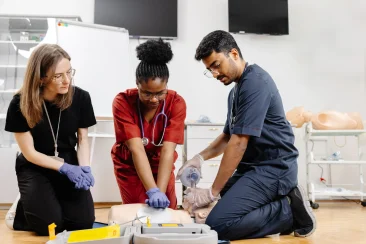
Earning your ACLS certification is a straightforward process, and each step is designed to help you build confidence with advanced emergency care. Here’s how nurses typically complete the certification from start to finish:
- Verify Your BLS Certification Is Current
You’ll need an active BLS card before you begin. If yours has expired, renew it first to ensure you’re fully prepared for advanced skills.
- Choose an Accredited Training Provider
Select a program that follows ILCOR-aligned resuscitation guidelines, which ensure your ACLS training is evidence-based, up to date, and widely accepted by healthcare employers.
- Select Your Course Format
ACLS courses are offered fully in-person, blended (online learning plus an in-person skills check), or fully online.
- Register and Pay
Course fees vary depending on the provider and location. Some hospitals reimburse nurses, so check with your employer first.
- Complete Precourse Preparation
Many programs require you to complete pre-coursework such as online modules, rhythm reviews, or a self-assessment.
- Attend the Training Course
Depending on the format you choose, ACLS training can take anywhere from a few hours online to one or two full days in a classroom setting.
- Pass the Written Exam
The written exam evaluates your understanding of ACLS concepts, algorithms, and emergency pharmacology. Most programs require a 75–85% score to pass, and many allow you to reference course materials during the test.
- Pass the Skills Assessment
You’ll demonstrate algorithms, CPR performance, airway skills, and team communication in a simulated scenario to confirm you can apply ACLS principles in a high-pressure environment.
- Receive Your ACLS Certification
Once you’ve passed both exams, you’ll receive your ACLS provider card or eCard. To keep it active, you’ll need to renew every two years with a refresher course.
ACLS Certification Course Formats
ACLS training is available in several formats, giving nurses the flexibility to choose the option that best fits their schedule and learning style.
Traditional In-Person Courses
These classes are taught entirely by an instructor in a classroom setting and typically span one to two full days of training, totaling about 12–16 hours. You’ll participate in live demonstrations, hands-on skills practice, rhythm interpretation, and team-based simulations.
Hybrid Courses
Blended ACLS programs combine the convenience of online self-paced learning with a short, in-person skills assessment led by a certified instructor. The online portion covers the core ACLS concepts, while the hands-on session ensures you demonstrate proficiency in airway management, CPR quality, and algorithm application.
Fully Online Courses
Some providers now offer 100% online ACLS certification, allowing you to complete the entire program from anywhere. This format is especially valuable for busy nurses, night-shift staff, parents, and travel nurses who need a flexible option that fits around changing schedules. Online ACLS also eliminates travel time and lets you move through the material at your own pace.
Hospital-Based Programs
Many hospitals and healthcare systems offer ACLS training through their own education or clinical training departments. These sessions are often free or discounted for staff and may be scheduled around shift availability.
Cost Considerations
The cost of ACLS certification varies by provider, but most nurses can expect to pay $150–$250 for an initial course and $125–$200 to get it renewed. Many hospitals cover some or all of these expenses for nurses working in high-acuity units where ACLS is required, so it’s always worth checking with your employer before registering.
Certification Validity and Renewal
ACLS certification is valid for two years, and nurses must complete a renewal course before the expiration date to keep their credentials active. There is not always a grace period if certification lapses, so timely renewal is essential, especially if ACLS is required for your unit. Many renewal courses also provide continuing education (CE) credits, allowing you to maintain both your certification and state licensure requirements at the same time.
Tips for Passing the ACLS Exam
Preparing for the ACLS exam is all about building familiarity with the material and practicing how you’ll apply it in real scenarios. These strategies can help you feel confident and well-prepared on test day:
Master the ACLS Algorithms
The algorithms are the backbone of ACLS, so it helps to review each one until you can move through the steps without hesitation. Focus on the core sets you’ll use most often:
- Adult Suspected Stroke
- Acute Coronary Syndrome
- Bradycardia With a Pulse
- Tachycardia With a Pulse
- Adult Cardiac Arrest
- Post–Cardiac Arrest Care
- ACLS Electrophysiology
Spend time walking through these flowcharts, practicing what you’d do and why at each step.
Use Flashcards for Drug Dosages and ECG Rhythms
Medications and rhythms show up in both the written test and the skills assessment. The repetition of flashcards makes it easier to memorize drug names, dosages, and indications, as well as quickly recognize the most common ACLS rhythms.
Take Practice Tests
Practice exams help you get comfortable with the question format and identify areas where you need more review. Many providers offer free sample questions or full-length mock tests.
Join Study Groups
Studying with coworkers or classmates can reinforce key concepts and give you the chance to talk through scenarios together.
ACLS vs Other Certifications
| Certification | Patient focus | Purpose | Key Skills |
|---|---|---|---|
| BLS | All ages | Foundational lifesaving training | CPR AED use Basic airway management |
| ACLS | Adults | Advanced management of cardiovascular and respiratory emergencies | Rhythm interpretation Emergency pharmacology Advanced airways Algorithms Team roles |
| PALS (Pediatric Advanced Life Support) | Infants & children | Recognition and treatment of pediatric emergencies | Pediatric assessment Respiratory failure and shock management Pediatric pharmacology |
| ACLS-EP (ACLS for Experienced Providers) | Adults | Advanced, scenario-driven training for seasoned clinicians | Complex decision-making Leadership Managing atypical cases |
Career Benefits
- Access to ICU and ED Positions: ACLS is required in most intensive care and emergency departments, making certified nurses immediately eligible for some of the most dynamic high-acuity roles in the hospital.
- Higher Salary Potential: Many facilities offer pay differentials for specialty certifications, and high-acuity units often come with higher compensation, making ACLS a valuable credential for increasing your earning potential.
- Travel Nursing Eligibility: Maintaining this certification expands your options and keeps you competitive for high-demand placements.
- Leadership Opportunities: ACLS strengthens critical thinking, teamwork, and communication. These skills translate directly into roles like charge nurse, rapid response nurse, code team leader, or preceptor.
When to Get Certified
- Before starting critical care roles: Units like the ICU, ED, PACU, and telemetry often require ACLS on day one.
- Within 3–6 months of hire: Many facilities set this as a standard onboarding requirement for nurses in high-acuity or step-down settings.
- Before travel nursing applications: Travel agencies typically require ACLS for most acute care assignments. Having it ready before you apply helps streamline interviews, onboarding, and placement into your preferred contracts.
Frequently Asked Questions
No. ACLS is required for nurses in critical care, emergency, telemetry, PACU, and other high-acuity settings, but not for every nursing role.
ACLS is valid for two years. You must renew before the expiration date to stay active.
Yes. Many accredited providers now offer fully online or hybrid ACLS programs that allow nurses to complete coursework and testing on their own schedule.
At Advanced Medical Certification (AMC), our course pricing and bundle options are designed to give nurses flexibility and value. Typically, an initial ACLS certification ranges from $150– $250, depending on format and provider. AMC often offers course bundles, allowing you, for example, to combine ACLS with BLS at discounted rates rather than purchasing each individually.
BLS covers foundational lifesaving skills such as CPR, AED use, and basic airway management. ACLS adds advanced algorithms, rhythm interpretation, emergency medications, and team-based resuscitation.
It can be challenging, but nurses who review the algorithms, practice rhythms, and complete online modules typically feel well-prepared.
You may need to retake the full certification course, and some employers may not allow you to complete all patient responsibilities until it’s renewed.
Yes, especially for ICU, ED, telemetry, and travel positions. Having ACLS upfront shows initiative and makes the hiring or onboarding process smoother.
Ready to Take the Next Step in Your Nursing Career?
ACLS certification is one of the most valuable credentials a nurse can hold. It strengthens your ability to recognize life-threatening emergencies and make a meaningful impact on patient outcomes.
If you’re ready to take the next step, don’t wait! Be proactive and explore accredited ACLS training options through AMC, where flexible online courses, bundled certifications, and evidence-based content make it easier than ever to earn or renew your ACLS credential on your schedule.