How to Get Neonatal Resuscitation Certification: A Step-by-Step Guide

Getting neonatal resuscitation certification involves completing an evidence-based curriculum and passing a certification exam. Upon successful completion, you receive a provider card valid for two years. The process is designed to be accessible for working healthcare professionals involved in newborn care, and for those whose employers accept fully online learning programs, the entire path from enrollment to provider card can be completed in under an hour.
This guide walks through what the certification covers, who needs it, how to complete the process, and what to consider when choosing a training provider.
Thank you for taking the time to complete this form.
What Is Neonatal Resuscitation Certification?
Neonatal resuscitation certification is a professional credential that proves a health care provider has the knowledge and skills to support newborns who fail to establish adequate breathing or circulation at birth. It is required by most hospitals, birthing centers, and neonatal intensive care units for any staff member who attends deliveries or cares for critically ill newborns.
Any standardized training program and subsequent certification should be grounded in guidelines published by the International Liaison Committee on Resuscitation, the global scientific body responsible for reviewing resuscitation research and issuing evidence-based recommendations worldwide. ILCOR's 2025 Consensus on Science with Treatment Recommendations sets the current standard for neonatal resuscitation training.
Who Needs a Neonatal Resuscitation Certification?
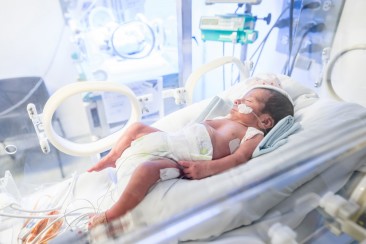
Neonatal resuscitation certification is often required or strongly recommended for any health care professionals who work in labor and delivery, provide immediate post-birth care, or may be called upon to care for newborns in a neonatal emergency. Like Basic Life Support (BLS), and Advanced Cardiac Life Support (ACLS), certification requirements are typically set by the employer or clinical setting rather than a single national body, so you should always confirm your facility's specific requirements before enrolling.
Professionals who commonly require neonatal resuscitation certification include:
- Registered nurses involved in newborn care, NICU, mother-baby, and emergency department settings
- Nurse practitioners and advanced practice registered nurses providing perinatal or neonatal care
- Certified nurse midwives and licensed midwives attending hospital and out-of-hospital births
- Respiratory therapists providing airway and ventilation support in the delivery room and NICU
- Physicians in OB-GYN, neonatology, pediatrics, anesthesiology, and family medicine who attend deliveries
- Physician assistants and nurse practitioners in perinatal, neonatal, or emergency care settings
- Paramedics and advanced EMTs in neonatal transport or emergency delivery settings
- Nursing, medical, and respiratory therapy students on labor and delivery or NICU rotations
Step-by-Step Guide: How Healthcare Professionals Can Get Certified in Neonatal Resuscitation
Step 1: Choose your training provider
Look for a provider whose course is built on current ILCOR standards, accredited through a recognized continuing medical education body, and accepted by hospitals and credentialing organizations nationwide. Before enrolling, confirm with your employer's HR department or credentialing coordinator that the provider you choose meets their requirements. Most credentialing policies are written around standards rather than specific providers, but some facilities do specify particular programs by name.
Step 2: Get the materials and study
Once enrolled, work through the course handbook before attempting the exam. Neonatal resuscitation content covers a wide range of clinical topics, from the physiology of the fetal-to-neonatal transition to advanced airway management, medications, and post-resuscitation care. Most programs include a digital handbook, videos, and supporting study materials. AMC offers a free practice test, a valuable preparation tool that lets you identify knowledge gaps before you sit for the actual exam.
Step 3: Complete the online curriculum
Work through all course modules at your own pace. The standardized training content areas typically include:
- Foundations of neonatal resuscitation skills and the fetal-to-neonatal transition
- Delivery room preparation, team roles, and equipment
- Initial assessment and the Golden Minute framework
- Positive-pressure ventilation and corrective steps
- Advanced airway management including endotracheal intubation and laryngeal mask airway
- Chest compressions, coordination with ventilation, and escalation
- Medications including epinephrine and volume expansion
- Post-resuscitation care and stabilization
- Preterm and low birth weight resuscitation
- Special clinical considerations and ethics
Step 4: Pass the exam
The certification exam assesses your ability to apply the neonatal resuscitation algorithm to realistic clinical scenarios. Questions are drawn directly from the course content and aligned with current ILCOR guidelines. Most programs include unlimited exam retakes, and results are typically available immediately upon submission.
Step 5: Receive your provider card
Upon passing and completing the course, you receive a neonatal resuscitation provider card valid for two years from the date of completion before you need to obtain a renewal. Depending on the provider, your ecard may be issued immediately after you successfully complete the exam or may follow a processing period. A printed card is typically available by request.
How Long It Takes and What It Costs

For health care professionals whose employers accept fully online neonatal resuscitation certification, Advanced Medical Certification offers a 100% online course that can be completed in under an hour. The course is built on current ILCOR standards, accredited through the Postgraduate Institute for Medicine, and Joint Commission compliant. Up to 8 AMA PRA Category 1 Credits™ are available for initial certification, and up to 4 for recertification, at no additional cost through the joint providership with PIM.
Our certification is $149 while our recertification is $129. A PALS and neonatal resuscitation bundle is available at $249. All study materials, including a comprehensive digital handbook, videos, and audiobooks, are included with enrollment. Unlimited free exam retakes are included, and a free practice test is available before you purchase. Your digital provider card will be issued instantly upon passing.
Certified and Ready Before the Next Delivery
Getting neonatal resuscitation certification is a straightforward process: choose a provider whose course is built on current ILCOR science and accepted by your employer, work through the curriculum, pass the exam, and receive your provider card. For most health care professionals, the entire path can be completed in a single session.
If you are considering AMC's fully online neonatal resuscitation certification, the free practice test is a no-risk place to start. It gives you a feel for the exam format, identifies any content areas worth reviewing, and requires no commitment before you purchase. The full certification course is $149, includes all study materials and unlimited exam retakes, and delivers your digital provider card instantly upon passing.
For clinicians who attend deliveries, work in neonatal care, or may be called upon when a newborn needs resuscitation, there is no more flexible or accessible path to a current credential, rooted in science.
Frequently Asked Questions About Neonatal Resuscitation Certification
Yes, fully online neonatal resuscitation certification is available through providers like AMC. AMC's course is 100% online with no in-person component required, built on current ILCOR standards, and accepted by more than 98% of health care employers nationwide. Before enrolling in any online program, confirm that your employer's credentialing policy accepts fully online neonatal resuscitation certification.
The time required depends on the program format. Fully online programs like AMC's can be completed in under an hour, including course review and exam, which is useful for healthcare professionals who work long hours. Traditional blended programs that include an in-person skills component typically require several hours spread across an online assessment and an instructor-led event.
The certification exam is designed to assess your ability to apply the neonatal resuscitation algorithm to clinical scenarios rather than memorize isolated facts. Providers who work through the course materials thoroughly before attempting the exam generally find the process manageable.
No. While nurses, particularly labor and delivery, NICU, and mother-baby nurses, make up a large portion of those who hold neonatal resuscitation certification, the credential is for any health care professional who attends deliveries or provides immediate post-birth care. Physicians, respiratory therapists, nurse midwives, physician assistants, nurse practitioners, paramedics, and students in clinical rotations all pursue neonatal resuscitation certification when their roles require it.