Is BLS Certification Required for ACLS Certification?

Basic Life Support (BLS) is not always a formal enrollment prerequisite for Advanced Cardiac Life Support. That said, the skills you learn in BLS are essential, as an ACLS certification assumes you already know how to perform high-quality CPR, use an AED, manage a basic airway, and execute the foundational steps of resuscitation. Without that foundation, the advanced content in an ACLS course is difficult to absorb and harder to apply under pressure.
The Short Answer: Is BLS Certification Required for ACLS?
It depends on the provider and the employer, but the practical answer is yes in almost every meaningful sense. As a formal enrollment prerequisite, BLS requirements vary from program to program. Some ACLS trainings require a current BLS card before you can register while others do not. AMC's ACLS handbook states clearly that all ACLS providers are presumed capable of performing BLS correctly, and it is essential that ACLS providers be proficient in BLS first.
As an employer requirement, most health care facilities require both. Holding an ACLS card does not satisfy a separate BLS requirement as they are distinct credentials that serve different functions in credentialing and compliance.
Thank you for taking the time to complete this form.
Why ACLS Certification Builds on BLS

The relationship between BLS training and ACLS is sequential by design. BLS teaches the lifesaving, foundational cardiac care and respiratory emergency responses. These include CPR for adults, chest compressions, rescue breathing, AED use, and choking management. ACLS takes over where BLS ends, adding the clinical decision-making, pharmacology, rhythm interpretation, advanced airway management, and team coordination that a resuscitation team uses once those foundational steps are already underway.
Think of it as a clinical progression. In a real life-threatening medical emergency, BLS starts first. Compressions are initiated, an AED is applied, and ventilations are delivered. ACLS interventions layer on top: IV or IO access is established, epinephrine is administered, rhythm is assessed, and the team leader coordinates the response. You cannot effectively perform ACLS without the BLS steps already in place. The same is true in your training.
The Difference Between ACLS and BLS
| Basic Life Support | Advanced Cardiovascular Life Support | |
|---|---|---|
| Scope | Foundational emergency response | Advanced cardiac and cardiovascular care |
| Who needs it |
|
|
| Core skills |
|
|
| Pre-course expectation | No formal prerequisites | Assumes CPR, First Aid, and BLS proficiency |
| Certification validity and renewal period | Every two years | Every two years |
| CME credits (AMC) | Up to 4 AMA PRA Category 1 Credits™ | Up to 8 AMA PRA Category 1 Credits™ |
For healthcare professionals who work with infants and children, PALS (Pediatric Advanced Life Support) is the pediatric equivalent of ACLS, and similarly builds on BLS as its foundation.
Do Employers Require Both BLS and ACLS?
For most clinical roles that require ACLS, employers will require active certification for both skill areas because they each serve distinct credentialing functions. BLS demonstrates that a provider can perform foundational emergency response, regardless of setting. ACLS demonstrates competency in advanced resuscitation management for providers working in high-acuity environments. Most hospital credentialing policies treat them as separate requirements that must each be current.
How to Get ACLS or BLS Certified
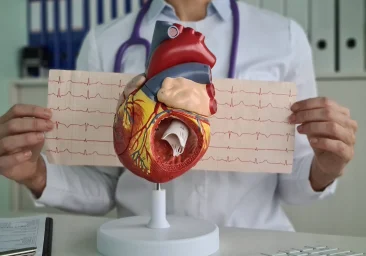
Both BLS and ACLS certification are available fully online through AMC and each course can be completed in under an hour, at your own pace, on any device.
AMC's BLS and ACLS courses are built on current ILCOR standards, accredited through the Postgraduate Institute for Medicine, and accepted by more than 98% of health care employers nationwide. Up to 4 AMA PRA Category 1 Credits™ are available for BLS and up to 8 for ACLS, at no additional cost through the joint providership with PIM. Digital provider cards are issued instantly upon passing. Unlimited free exam retakes are included for both courses.
Free courses are available for both BLS and ACLS through Save a Life by AMC in partnership with the Disque Foundation. The free courses cover the same material and include a completion certificate, making it a useful starting point for self-study or exam preparation before committing to the paid accredited certification. A free practice test is also available for each course.
Before enrolling, a healthcare provider should always confirm their employer's specific requirements with HR or your credentialing coordinator. Most credentialing policies accept any accredited, ILCOR-aligned provider.
Frequently Asked Questions About BLS and ACLS
ACLS assumes you already know how to perform high-quality CPR, use an AED, and manage a basic airway. Those skills are taught in BLS and the advanced course references them as existing competencies and builds on top of them. Providers who skip BLS often find significant knowledge and skills gaps hindering their ACLS preparation.
No. ACLS and BLS are distinct credentials that serve different functions in employer credentialing and clinical compliance. Holding an ACLS card does not satisfy a separate BLS requirement. Most health care facilities require both cards to be current, and a lapse in either can affect onboarding, assignments, or contract eligibility.
Yes, ACLS is more advanced. BLS covers the foundational resuscitation skills that most providers can learn without prior clinical knowledge. ACLS goes significantly deeper, covering ECG rhythm interpretation, medication administration, advanced airway management, and multi-step algorithms for cardiac arrest, stroke, bradycardia, and tachycardia. Providers who complete BLS first and work through the ACLS materials thoroughly generally find the course manageable. A free practice test is available before you purchase, and unlimited exam retakes are included.
CPR is a BLS skill. Basic Life Support is where chest compressions, rescue breathing, AED use, and choking relief are taught. ACLS assumes you already know how to perform CPR and layers advanced interventions on top of it.
Choosing the Right Certificate: The Foundation and Advanced Credential Are Both Within Reach
The most efficient path is straightforward: complete BLS first, then move to ACLS. AMC's fully online courses make it possible to complete both in a single day, bundle them to save on pricing, and align renewal dates so you can easily update your credentials down the line.
If you are not sure where to start, the free practice tests for both courses are a no-risk way to assess your readiness before you commit.