What is a BLS Card? Basic Life Support (BLS) Certification and How to Get One

The shift starts early. Before most people have finished their first cup of coffee, healthcare workers and emergency responders are already checking charts, receiving handoffs, stocking equipment, and preparing for whatever the day brings. Some moments are routine. Others aren’t. A patient’s condition changes suddenly. An alarm sounds. A room fills with urgency. And in those moments, training takes over.
That’s the reality of this work. Whether you’re in a hospital, clinic, ambulance, school, or long-term care facility, you’re expected to stay calm, act decisively, and protect lives in their most vulnerable moments. Skills like high-quality CPR, AED use, airway management, and coordinated team response aren’t optional in these environments. They’re foundational to patient safety and professional responsibility and are built on evidence-based standards, such as those established by the International Liaison Committee on Resuscitation (ILCOR).
Thank you for taking the time to complete this form.
The responsibility is real, and so is the preparation behind it. That’s why employers require proof that you’re Basic Life Support (BLS) certified. These heavily regulated environments are required to verify that staff credentials are current, legitimate, and issued by approved training providers. A valid BLS card lets organizations know that every member of their team can respond appropriately in a life-threatening emergency.
How to Get a BLS Card
There’s a lot of confusion out there about what “counts” as a BLS card, especially with online options that promise instant certification. Here’s the simplest way to think about it:
A BLS card is only as valuable as the standards behind it and the employer acceptance that follows.
You can complete a course and still end up with a card that your workplace won’t recognize if it doesn’t meet their requirements.
If you’re looking for an employer-accepted path to getting your BLS card that won’t waste your time, follow the steps below.
Step 1: Confirm Basic Life Support Requirements
Before you register anywhere, check what your workplace (or program) actually requires. In regulated environments, “BLS certified” can mean something very specific. If you work in a clinical role, also confirm whether you need BLS alone or additional credentials such as ACLS.
Look for details like:
- Whether they require online, blended, or in-person training
- Whether they require a hands-on skills evaluation
- Whether they prefer a specific training pathway
- What they need to verify the credential (eCard, QR code, ID number, verification portal)
If you’re unsure, ask HR, your clinical educator, your supervisor, or your program coordinator. A two-minute question now can save you a full retake later.
Step 2: Choose an Accredited BLS Training Provider
A website can look professional and still issue a credential that employers won’t accept. A legitimate provider should be able to clearly explain:
- How the course is accredited (who reviews/approves the course)
- Whether the training is based on current resuscitation standards
- How employers confirm the credentials are real and current
AMC, for example, offers accredited BLS courses reviewed by the Postgraduate Institute for Medicine (PIM), aligned with current ILCOR guidelines, and provides instant digital provider cards for employer verification.
Step 3: Choose the Right BLS Class Format
The “right” format is the one that meets your employer’s requirements and fits your schedule. As long as it meets their guidelines, you can choose from an online class, in-person, or blended BLS training program. If your employer requires a hands-on evaluation, make sure you select a path that includes it.
Step 4: Hands-on CPR and AED Evaluation
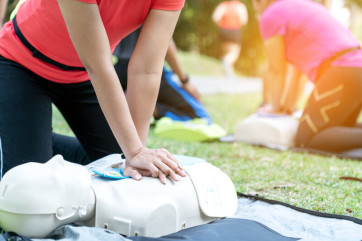
Some clinical roles require a hands-on skills evaluation as part of BLS certification. This typically includes demonstrating CPR quality through chest compressions, maintaining the correct compression rate and depth, using an automated external defibrillator (AED), and basic airway management. Not all programs include this step, so make sure you select a BLS course that meets your employer’s expectations.
Step 5: Practice Life-Saving Team Scenarios and Perform CPR
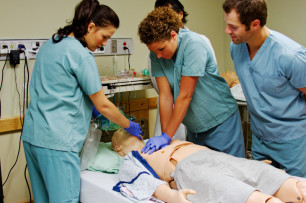
In clinical and emergency settings, life-saving care rarely happens in isolation. Multiple responders may be involved, each with a specific responsibility, and outcomes depend on how effectively those roles work together.
Team-based emergency scenarios are designed to reinforce that coordination. They emphasize clear role assignment, effective communication during high-stress moments, smooth transitions between tasks, and minimizing delays that can impact patient outcomes. These scenarios also allow learners to work through realistic “what-if” situations, helping them stay focused and adaptable when conditions change quickly.
Step 6: Receive Your BLS Certification Card
Once you complete the required training and assessments, you’ll receive your BLS certification card. They are often digital, with the option to request a physical card. Before you consider yourself “done,” make sure you can:
- Access your card quickly when asked
- Share it (email, download, print)
- Verify it using your course provider’s system
Who Needs BLS and Should Get Certified?
Healthcare Professionals and Clinical Staff
Nurses, physicians, EMTs, paramedics, medical assistants, therapists, and clinical students all work in environments where cardiac or respiratory emergencies can happen without warning. Employers rely on BLS certification to ensure every member of the care team can recognize an emergency, begin life-saving interventions immediately, and support advanced care when it arrives.
Emergency Responders and Public Safety
Firefighters, police officers, and emergency personnel are frequently the first to arrive on scene, often before additional medical support is available. BLS certification confirms they can deliver high-quality CPR, manage airways, deploy an AED, and coordinate care under pressure—skills that are essential in uncontrolled, high-stakes environments.
Education, Childcare, and Recreation
Professionals responsible for children or large groups are increasingly required to hold BLS certification. Teachers, childcare providers, coaches, lifeguards, and recreation staff face higher risks of choking incidents, breathing emergencies, and sudden cardiac events. Depending on the role, employers may pair BLS with first aid training to prepare staff for a broader range of emergencies.
Fitness, Corporate Safety, and Workplace Roles
Many employers now require or prefer BLS certification for fitness professionals, safety officers, security staff, and workplace emergency response teams. In these roles, BLS certification signals preparedness to protect others, reduces liability, and strengthens safety protocols.
What to Avoid When Choosing Online BLS Courses
Online BLS courses can meet employer and regulatory expectations, just know that not all online options are equal. Here are the most common mistakes to avoid.
Assuming all online BLS courses are accredited.
Some courses are designed for general knowledge, not professional use. Always confirm that the provider is accredited and follows current resuscitation guidelines.
Skipping required hands-on skills.
Many employers require CPR and AED skills to be evaluated in person. If your role expects hands-on validation, a fully online class may not be accepted.
Overlooking provider legitimacy.
A polished website isn’t enough. Legitimate providers clearly explain their accreditation, guideline alignment, and how employers verify the credential.
Ignoring employer requirements.
Enroll only after confirming what your employer, school, or agency accepts. Getting certified first and asking later often leads to delays or retakes.
Relying on outdated training.
BLS standards change. Make sure the course reflects current guidelines and is regularly updated.
What a Valid Card Includes
Whether your BLS card is issued digitally or as a physical card, it must clearly show that your certification is current, legitimate, and verifiable. At a minimum, a valid BLS card should include:
- Your name and credential type
- Issue date and expiration date
- The issuing training provider
- A unique ID number, QR code, or verification link that allows employers to independently confirm the credential
These elements allow employers, hospitals, and training programs to quickly verify that your certification meets their requirements and is still active. Most certifications are valid for two years but always check the experiation date upon receiving your card.
How Employers Verify a BLS Card
In regulated and clinical environments, employers don’t rely on screenshots or verbal confirmation. They verify BLS cards to ensure certifications are current, legitimate, and issued by an approved provider.
Verification is usually quick and independent. Employers may:
- Enter a unique ID number
- Scan a QR code
- Use a digital verification link or portal
This allows them to confirm the credential is active, matches the individual, and meets workplace requirements. This process protects patients (and organizations from liability) while helping professionals avoid delays in onboarding, scheduling, or clinical placement.
Why Some BLS Cards Are Accepted and Others Aren’t
Employers don’t judge BLS cards based on whether they were earned online or in a classroom. What they care about is whether the credential is legitimate and up to date. In regulated and clinical environments, a BLS card must clearly show that the training meets professional standards and can be confirmed independently.
BLS cards that employers accept typically come from accredited training providers and follow current resuscitation standards. They need to be able to find clear issue and expiration dates and offer a reliable way to verify the credential, such as a unique ID number, QR code, or verification link. These elements allow employers to quickly confirm that the certification belongs to the correct individual and is still valid.
Cards are commonly rejected when this information is missing or unclear. If a provider does not clearly state its accreditation, does not explain how employers can verify the credential, or issues cards without meaningful assessment, employers may not accept the certification.
Tips for Choosing an Accredited Provider for BLS Renewal or First-Time Certification
When selecting a BLS course, a few quick checks can help make your certification and onboarding process with your employer much smoother:
- Confirm accreditation and oversight: Make sure the provider clearly states who accredits or reviews the course and which resuscitation guidelines the training follows.
- Verify how skills are assessed: Some employers require hands-on CPR and AED evaluation. Confirm the provider’s assessment method aligns with your workplace or program requirements.
- Ensure employer acceptance: When possible, confirm that your employer, school, or agency recognizes the provider’s BLS certification before enrolling.
- Check for verifiable digital cards: Accepted BLS cards include a unique ID number, QR code, or verification link, allowing employers to independently confirm the credential.
- Avoid “instant” or test-only certifications: Be cautious of programs that issue certification based solely on a quick test without meaningful instruction or assessment.
Getting BLS Certified the Right Way
Healthcare professionals and emergency responders already carry enough responsibility. The certification process shouldn’t add unnecessary friction, delays, or doubt. Making informed choices during the BLS certification process helps protect your time and your professional credibility.
Advanced Medical Certification offers a streamlined path to BLS certification designed for busy professionals. AMC provides flexible learning options, including online and blended formats, and issues digital BLS eCards with built-in verification features such as unique ID numbers and QR codes, making it easy for employers to confirm legitimacy.
Sign up today and earn a BLS card that employers trust and recognize