
- Stabilization: Temperature, Oxygenation, and Cardiovascular Monitoring
- Glucose, HIE Assessment, Communication, and Transport
Glucose, HIE Assessment, Communication, and Transport
Glucose management
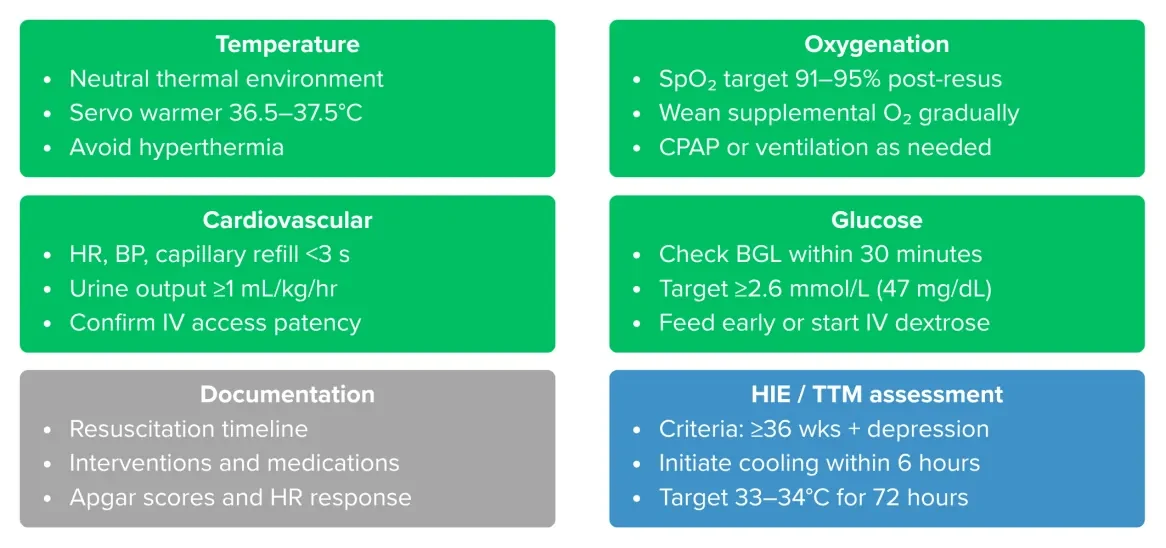
Hypoglycaemia is a predictable complication following neonatal resuscitation. The metabolic stress of asphyxia and the catecholamine surge of resuscitation depletes glycogen stores rapidly. Blood glucose should be checked within 30 minutes of stabilisation in all infants who have required resuscitation.
The threshold for treatment is a blood glucose level below 2.6 mmol/L (47 mg/dL). Treatment is with early enteral feeding where the infant's clinical condition permits, or intravenous 10% dextrose at a rate providing 4-6 mg/kg/min of glucose infusion rate where oral feeding is not appropriate. Glucose should be rechecked 30 minutes after any intervention to confirm response.
Hypoxic-ischaemic encephalopathy and therapeutic hypothermia
Targeted temperature management (TTM), also referred to as therapeutic hypothermia, is the only intervention proven to reduce neurological injury following hypoxic-ischemic encephalopathy (HIE). Eligibility criteria must be assessed promptly, as treatment must be initiated within 6 hours of birth to be effective.
The criteria for TTM eligibility are summarised in Table 14:
Criterion | Threshold |
|---|---|
| Gestational age | ≥36 weeks |
| Evidence of perinatal depression | One or more of: Apgar ≤5 at 10 minutes; need for resuscitation at 10 minutes; cord or early blood gas pH ≤7.0 or base deficit ≥16 mmol/L |
| Neurological signs | One or more of: altered level of consciousness, seizures, abnormal tone, abnormal primitive reflexes |
Where all three criteria are met, active cooling should be initiated within 6 hours of birth. The target core temperature is 33-34°C, maintained for 72 hours before controlled rewarming. Infants being assessed for TTM should not be actively warmed (passive cooling is acceptable during the assessment period). TTM is managed in a NICU setting with continuous monitoring and should not be initiated in a delivery room unless transfer to a tertiary centre will exceed the 6-hour window.
Communication with family
As soon as the infant is stable, the team leader needs to update the family in brief, honest and plain language. Families should be offered the opportunity to see and touch the infant as soon as it is clinically safe to do so.
Documentation
Accurate and spontaneous documentation is both a clinical and medicolegal requirement. The resuscitation record should include: the time of delivery and time of each intervention, all medications administered with dose and route, Apgar scores at one and five minutes, heart rate at key decision points, and the identity of all providers present.
Neonatal transport
Where an infant requires transfer to a tertiary NICU following resuscitation, thermoregulation, IV access, and continuous monitoring must be maintained throughout transport. For infants on TTM, the cooling device must accompany the infant. Transport teams should receive a full handover including the resuscitation timeline, medications administered, and current vital signs before departure.
The post-resuscitation stabilization checklist is summarised in Figure 7.
Medically reviewed by: Kim Murray, RN, MS., Medical Educator

