
- Physiological Vulnerabilities and Thermal Management
- Respiratory Management, ELBW, and Periviable Birth
Respiratory Management, ELBW, and Periviable Birth
Early CPAP versus PPV
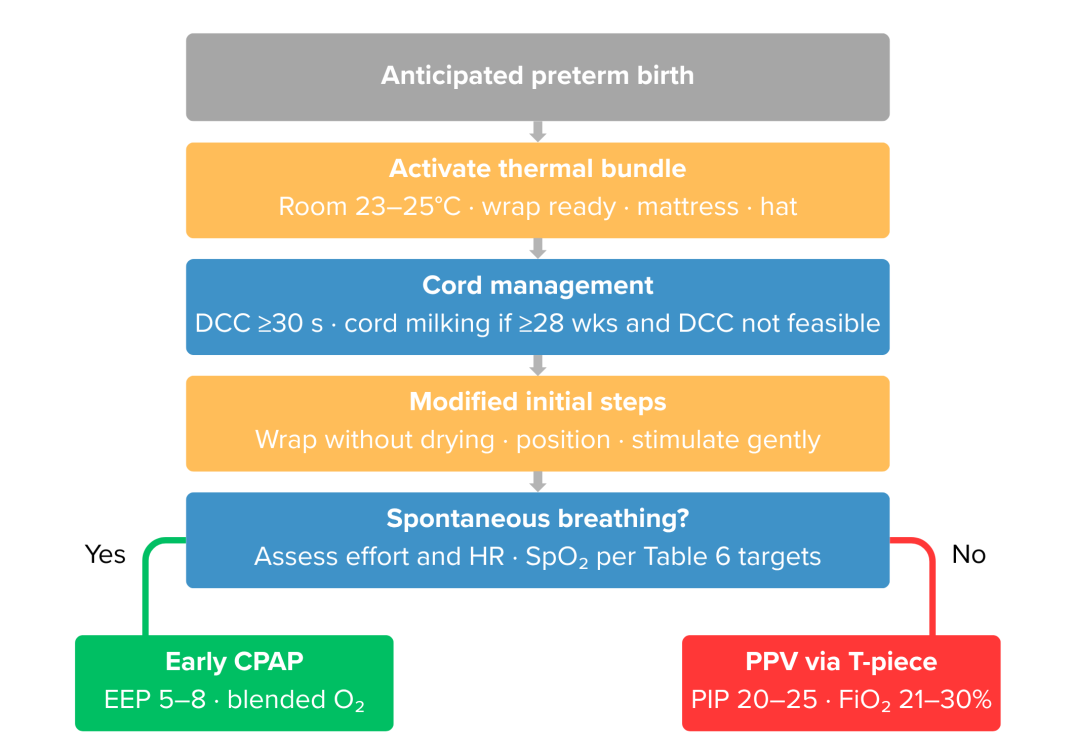
For preterm infants who are breathing spontaneously at birth (even with some degree of respiratory distress), early CPAP is preferred over immediate PPV. Preterm lung units that are already partially recruited can be maintained open with CPAP, preventing the inflation injury caused by repeated alveolar opening and closing under positive pressure. Immediate intubation and PPV in a spontaneously breathing preterm infant causes unnecessary lung injury.
Early CPAP parameters:
- Starting PEEP: 5-8 cmH₂O
- Delivery: T-piece resuscitator, flow-inflating bag, or dedicated CPAP device
- FiO₂: blended at 21-30%, titrated to SpO₂ targets
PPV is indicated for preterm infants with apnea, inadequate respiratory effort, or heart rate below 100 bpm. When PPV is required, the T-piece resuscitator is the preferred device because it delivers consistent, preset PIP and PEEP regardless of provider fatigue or technique variation - a significant advantage for the fragile preterm lung.
The key preterm versus term management differences are summarized in Table 16:
Parameter | Term | Preterm (<35 weeks) |
|---|---|---|
| Initial FiO₂ | 21% | 21-30% |
| Respiratory support (if breathing) | Observation / free-flow O₂ | Early CPAP preferred |
| PPV device | Any device | T-piece resuscitator preferred |
| Initial PIP | 20-25 cmH₂O | 20-25 cmH₂O (lower end preferred) |
| Thermal wrap | Not routinely indicated | Polyethylene wrap/bag for <32 weeks |
| Cord milking | Not recommended | May be considered at ≥28 weeks when DCC not feasible |
Extremely low birth weight infants
Infants below 1,000 grams require additional precautions beyond the standard preterm approach. Early surfactant via INSURE (intubation-surfactant-extubation) or LISA (less invasive surfactant administration through a thin catheter while the infant remains on CPAP) reduces the need for mechanical ventilation.
Permissive hypercapnia (tolerating pCO₂ of 45-55 mmHg) is preferred over aggressive ventilation targeting normal values, as it reduces ventilator-induced lung injury. Every intervention should be performed deliberately and gently; rapid haemodynamic fluctuation from fluid boluses, vigorous suctioning, or pressure swings increases IVH risk significantly in this population. UVC access is almost always required.
Periviable birth (22-25 weeks gestation)
Births between 22 and 25 weeks gestation require a different framework than routine preterm resuscitation. Parental values are central; keep in mind outcomes at this gestational age vary widely, and resuscitation decisions should be made collaboratively with the family following accurate antenatal counselling.
Below 22 weeks, resuscitation is generally not indicated. At 22-24 weeks the approach is individualised, guided by gestational age, weight, and parental wishes. From 25 weeks, resuscitation is generally indicated. Providers should be familiar with their institution's periviability guidelines and present survival and morbidity data to families in plain language, without false certainty in either direction.
Late preterm infants (34–36 6/7 weeks)
Late preterm infants are frequently underestimated in terms of resuscitation risk. They may appear similar to term infants but have significantly higher rates of respiratory transition difficulties, hypothermia, and hypoglycaemia. Late preterm infants who require any resuscitation should be monitored with the same vigilance as extremely preterm infants in the immediate postnatal period.
The preterm resuscitation pathway is summarized in Figure 8.
Medically reviewed by: Kim Murray, RN, MS., Medical Educator

